
Barcelona, the epicentre of the AI energy revolution.
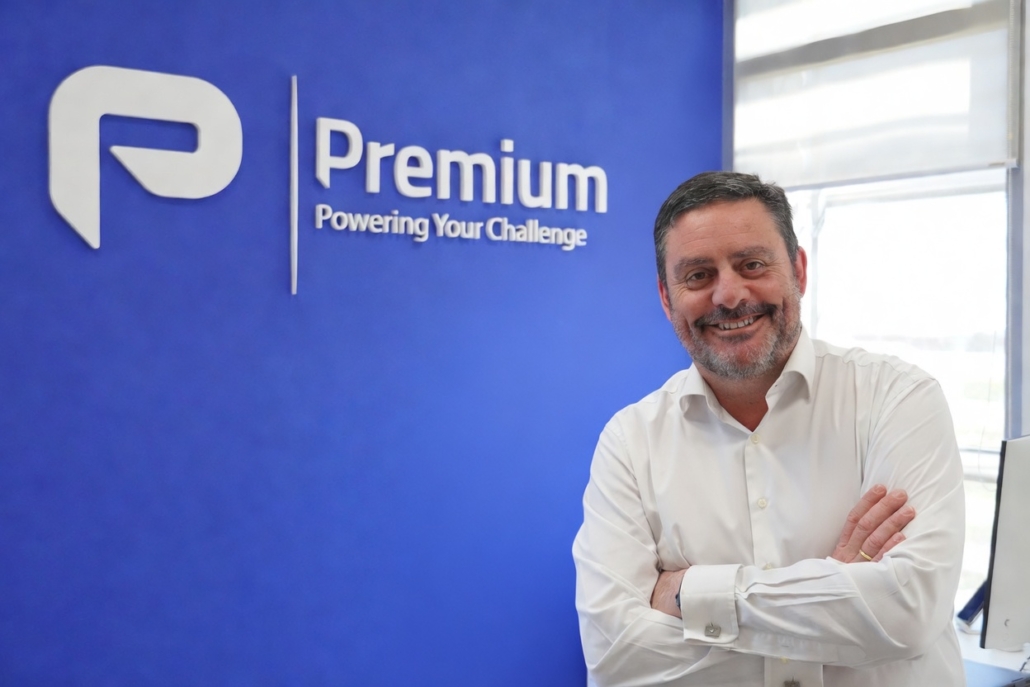
Barcelona, the epicentre of the AI energy revolution. Where is Spanish industry?
A view from the OCP EMEA Summit 2026 — and a message to the Spanish industrial base of pumps, heat exchangers, valves and fluid systems

Born in Barcelona, Powering the World
This week, the Centre de Convencions Internacional de Barcelona has hosted the OCP EMEA Summit 2026. Two days. Hundreds of engineers, executives and technology leaders from the largest companies on the planet: NVIDIA, Microsoft, Schneider Electric, AMD, Oracle, ABB, Eaton. And me, walking the aisles with a growing certainty that what is being decided here is not only the design of the next data centre. What is being decided is how the world is going to consume — and manage — energy over the next two decades.
Let me explain why that matters. And why it matters especially if you design or manufacture pumps, heat exchangers, industrial fluid systems, or anything related to the transfer of thermal energy.
The consensus arrived sooner than expected
Eighteen months ago, the 800 VDC bus in data centres was an advanced technical bet — an attractive but speculative roadmap. This week, in a room full of hundreds of industry engineers, Schneider Electric framed it in a single sentence that will resonate across the industry:
— Schneider Electric, OCP EMEA Summit 2026
The sidecar — a power rack adjacent to the compute rack that converts AC to 800 VDC right on the data-centre floor — is now the architectural consensus of the industry. Not a speculative roadmap. A decision. Oracle puts it on its slides. Eaton has it as physical hardware on display in the Innovation Village. Microsoft is rolling it out across its new campuses. NVIDIA explicitly includes it among its four OCP contributions for data-centre efficiency.
For those of us who have spent years working in power electronics for critical applications — railway, defence, renewables — this shift has a particular flavour. The logic that defines the 800 VDC sidecar is exactly the same logic we have been applying for decades in railway traction: high-voltage bus, localised conversion, redundancy, real-time telemetry. The data-centre world is rediscovering what railway traction has known since the nineties. And the roadmap is clear: 1.2 MW sidecars in 2027, centralised DC distribution at 5 MW in 2028–2029, solid-state transformers at 10 MW in 2030.
Energy is the problem. Efficiency is the only way out.
NVIDIA presented at the summit two figures that ought to be on the front page of any European industrial plan for the next twenty years.
First: energy today represents 85% of the total operating cost of a data centre. Not the hardware. Not the software. Not the staff. Energy.
Second: data centres will go from today’s 1–2% of global electricity consumption to 7–8% over the next twenty years. For context: every interaction with ChatGPT consumes 500 ml of water. And the growth rate of AI models is not slowing down — it is accelerating.
If Europe does not act on efficiency, that growth will translate into energy dependence, unsustainable pressure on the grid and emissions impossible to offset. Every percentage point gained in the power-conversion chain — from grid to chip — has a direct and massive impact on the operator’s dominant budget line. OmniOn Power quantified it without ambiguity: 1 percentage point of efficiency improvement equals 2 MW saved per 100 MW of installed DC power, or roughly USD 250,000 per year per medium-scale installation.
That is why the entire industry is here, in Barcelona, talking about inductors, transformers, capacitors, GaN and SiC semiconductors, CDUs and sidecars. Not because they are exotic components. Because they are the difference between a data centre that destroys energy value and one that manages it intelligently.
Barcelona, centre of gravity of an ecosystem forming right now
There is something I find difficult not to mention this week. Barcelona hosts the OCP EMEA Summit 2026. Barcelona is home to the Barcelona Supercomputing Center (BSC), explicitly designated as a node of the European AI Factories within the EuroHPC–NVIDIA programme — a programme aimed at accelerating sovereign European AI, with the BSC among its founding nodes. Three hundred kilometres from here, in Aragón, Microsoft has just announced a multi-campus expansion that will turn Spain into the strategic AI Cloud hub for Europe, with PUE 1.12 and zero water.
PUE 1.12 and zero water are not marketing targets. Translated to engineering, they mean: high-density liquid cooling, unavoidably. They mean CDUs. They mean primary and secondary refrigerant fluid loops. They mean heat exchangers, distribution manifolds, flow-control valves, high-precision pumps. On a campus 300 km from Barcelona.
Present on the banner. Absent from the floor.
And here I come to the point that troubles me most — and which I most feel needs to be said out loud.
In the Innovation Village of the OCP EMEA Summit, the banner identifying participants in the “High-Efficiency GaN-based Power Boards” project lists names like Microsoft, Google, Schneider Electric… and Premium PSU. I am proud of that. But when you walk the booths, the technical sessions and the corridors of the CCIB, the Spanish presence is conspicuously thin.
Submer is here, with its liquid-immersion ecosystem born in Barcelona, showing the world how a high-density server can be cooled without a single drop of evaporated water. Uniscool has a presence. The Spanish branch of MPS, too. And Premium. We are, basically, the ones who showed up.
That, at a conference defining the technical standards of the most dynamic technology sector on the planet, is a problem that deserves to be named.
The opportunity Spanish industry has not yet seen
The debate on data-centre energy efficiency is not only a debate on semiconductors and power electronics. It is a debate on how to move heat. How to distribute it. How to evacuate it. How to reuse it.
AMD Helios, NVIDIA GB300, Oracle Mt. Diablo: next-generation racks operate at densities of 100–300 kW per rack. Cooling that with air is physically impossible. The solution is liquid cooling: CDUs, refrigerant distribution loops, heat exchangers, precision manifolds, flow-control valves, high-pressure pumps, piping qualified for dielectric fluids or glycol-water at industrial temperatures and pressures.
Spain has world-class manufacturers in every one of those components:
- Industrial pumps with decades of experience in petrochemical and naval markets.
- Heat exchangers for the process industry.
- Control valves and pneumatic actuators for critical infrastructure.
- Piping and fluid systems for extreme conditions.
Most of them were not in Barcelona this week. Not because they lack technical capability. But because, in many cases, they do not yet know that this is their market. The data centre of 2027 is not the climate-controlled building of 2015. It is an industrial plant for managing thermal energy — and it requires precisely what they know how to do. And it will need it in volumes and at deployment rates that have no precedent in the history of Spanish industrial construction.
The pull that the digital sector exerts on the energy and thermal sectors is real, and it is now. Not in five years. The infrastructure that Microsoft is going to install in Aragón, the one BSC is going to deploy as an AI Factory, the one European colocation operators are going to build in Spain over the next thirty-six months: all of that infrastructure needs fluids, pumps, heat exchangers, valves. And the specifications are radically different from what most of those manufacturers have served until now.
What is coming — and what needs to happen
The roadmap drawn this week is clear and dated: 2027, 800 VDC sidecars at 1.2 MW per unit; 2028–2029, centralised DC distribution at 5 MW; 2030, solid-state transformers at 10 MW. Each step means more power, more compute density, more heat to manage and more precision in fluid distribution.
The OCP — Open Compute Project ecosystem is the forum where those standards are written. Where component technical specifications are agreed. Where the manufacturers that will serve that infrastructure are identified, qualified and recognised as part of the ecosystem. Not being in that forum does not mean the market does not exist. It means others will write the rules by which we will all have to play.
From Premium, we keep building the power-electronics platform these systems require. We have our researcher, Dr. Fernando Acosta, presenting our GaN platform here in the Innovation Village. But the message I want to leave is not about Premium. It is about Spain.
CEO, Premium S.A.
Born in Barcelona, Powering the World
About Premium SA — Premium SA is a Barcelona-based manufacturer of power electronics converters for railway, industrial and energy applications. With more than 900 standard product designs and over 30 years of operational experience, Premium SA supplies DC/DC converters, DC/AC inverters, AC/AC frequency converters, battery chargers, rectifiers and UPS systems from 50 W to 72 kW. All products are designed and manufactured at the Premium SA plant in Barcelona, with capability for EN 50155, EN 50121-3-2, EN 45545-2 and EN 61373 certification.
Premium SA · Barcelona, Spain · info@premiumpsu.com · +34 932 232 685 · www.premiumpsu.com